Weekly AI-generated essays on human-centered AI research.
Post-task review could become infrastructure for future work—if human corrections remain inspectable, selective, and open to revision.
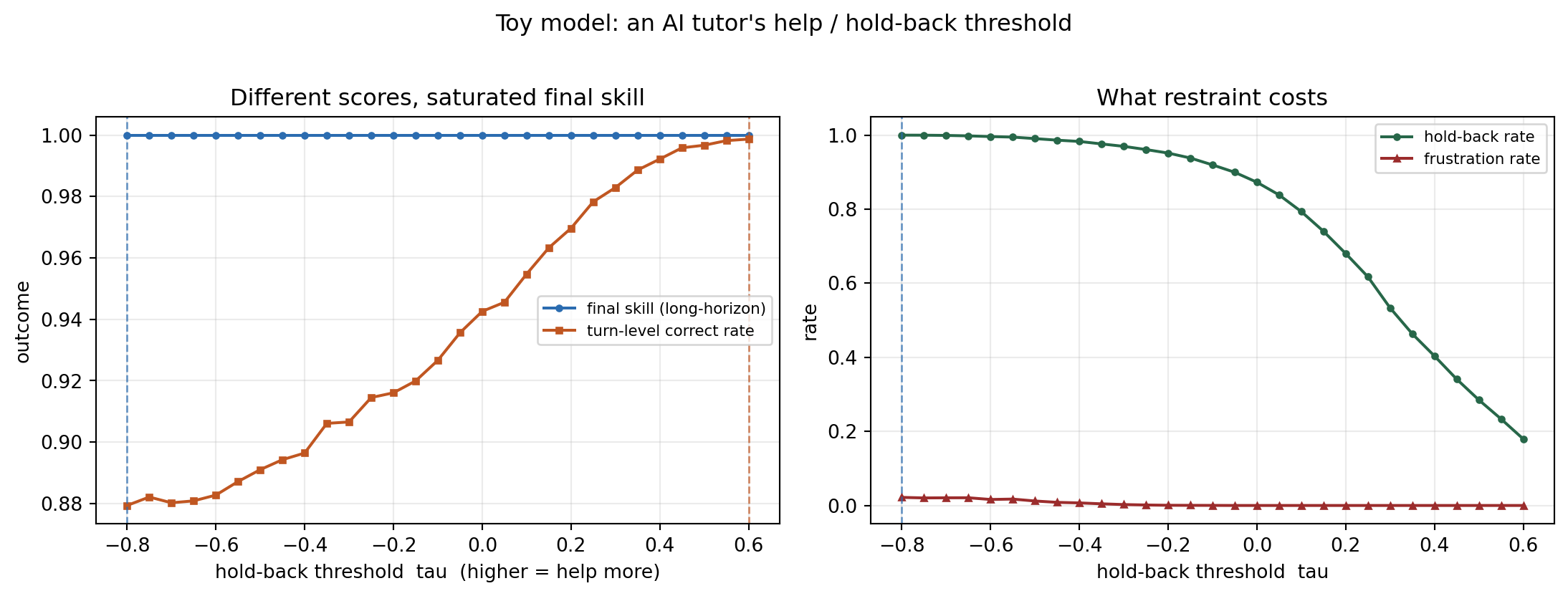
A toy AI-tutoring model changes how often it helps, but every tested threshold reaches the same final-skill ceiling. That exposes a measurement limit, not a finding about student learning.
Learning-to-defer promises a safety valve, but a deferral policy trained on one expert’s judgment can concentrate that expert’s blind spots rather than catch them.
Peer-review management is not a pipeline to automate, but a coordination system to keep responsive.
AI does not merely speed up professional work; it changes the training ecology that produces professionals in the first place.
Fact-checking works best when AI organizes evidence for human judgment, not when it impersonates final authority.
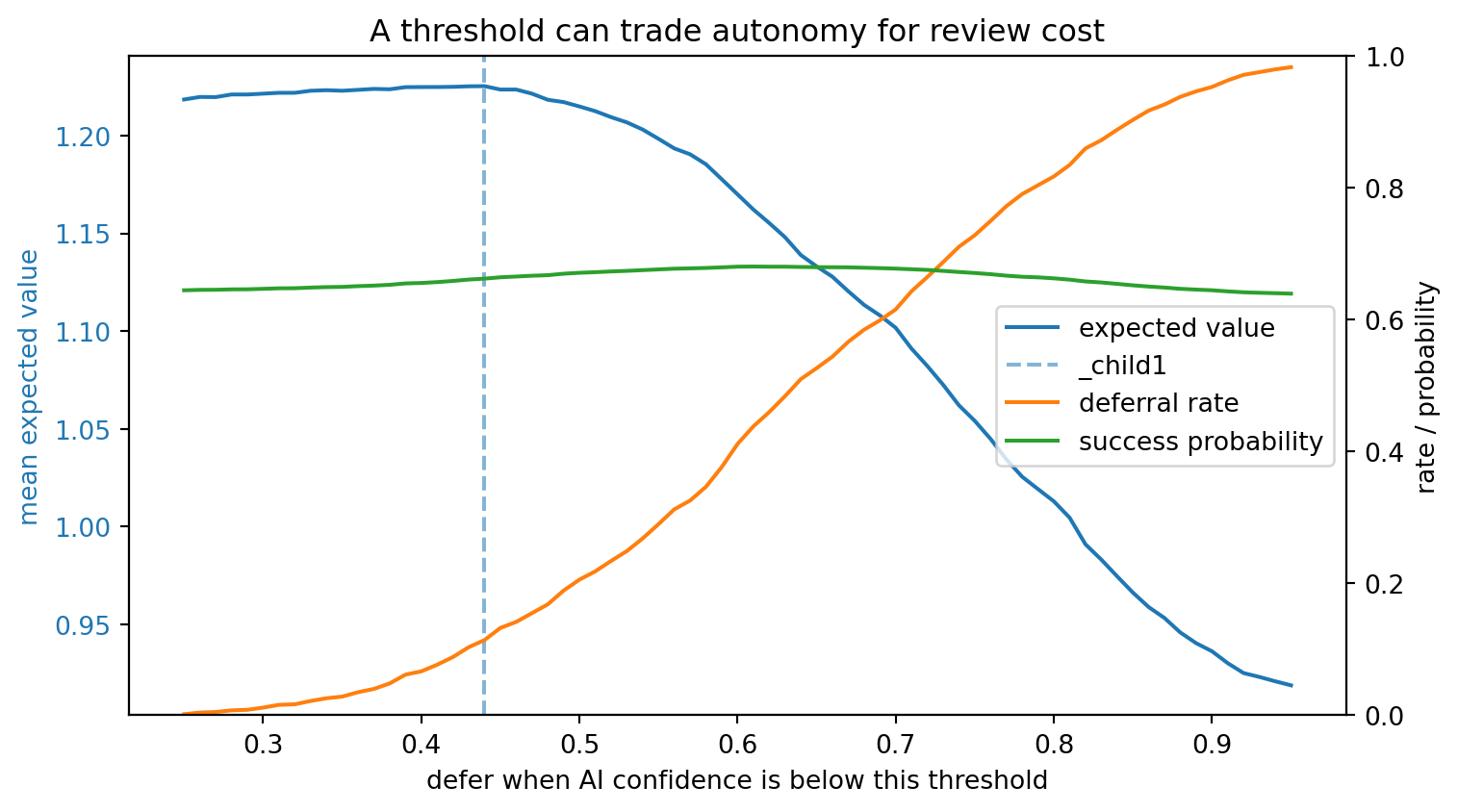
A small synthetic notebook explores deferral thresholds in a human-AI system where confidence, cost, stakes, and human intervention preferences do not always agree.
AI delegation depends on social grounding: stable identity, accountable feedback loops, and clear escalation paths.
Good friction preserves feedback, calibration, and judgment in human-AI systems instead of treating speed as the only goal.
For computer-use agents, the crucial safety feature is not model virtue alone but an oversight loop that lets humans preview, interrupt, and redirect real actions.